
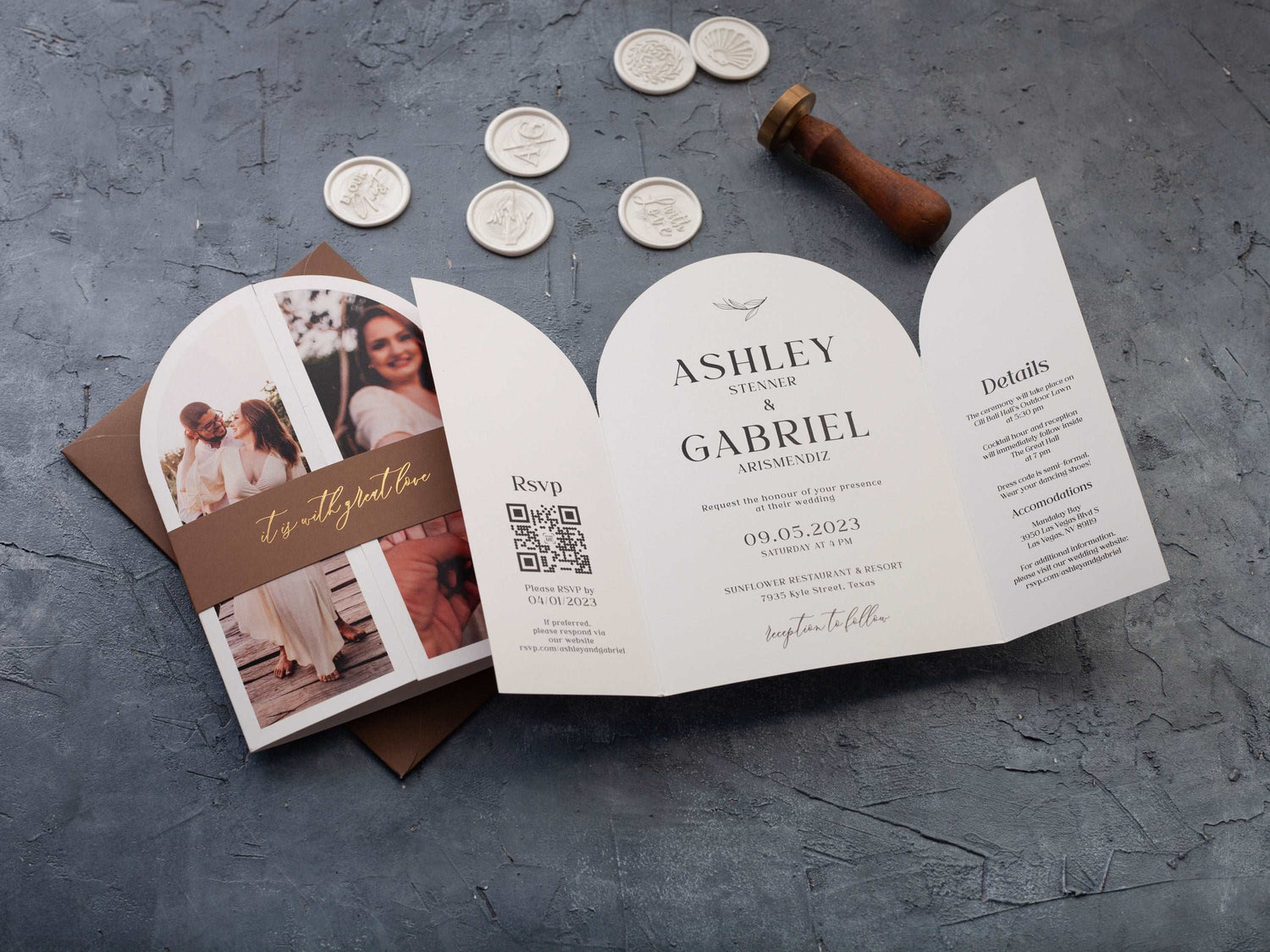
In short: Gatefold invitations open from two side panels for a dramatic reveal, while trifold invitations use three connected panels to organize more information. Choose gatefold for presentation and layered styling; choose trifold when you need a compact format that guides guests through ceremony, travel, schedule, and RSVP details.
Folded invitations give you more ways to reveal information than a flat card, but the fold should do useful work. A gatefold creates a centered opening and a sense of arrival. A trifold creates a sequence, leading the reader from one panel to the next. Both can be elegant; they simply organize the guest experience differently.
Before choosing, think about the amount of information you need to share, the formality of the event, how the suite will be mailed, and whether you want one dramatic focal point or a guided flow. This comparison will help you select the format that supports your wedding instead of adding complexity for its own sake.
What Is a Folded Wedding Invitation?
A folded wedding invitation is any design that opens along one or more creases instead of presenting every detail on a single flat card. The fold can create a reveal, organize information, or give the suite more room without relying on several loose inserts.
A simple folded card usually opens once, while gatefold and trifold formats use their panels more deliberately. Gatefold designs frame a central message; trifold designs guide the reader through a sequence. Browse folded wedding invitations to compare the wider format before choosing a more specialized structure.
The best option is the one that keeps names, date, venue, and guest instructions easy to scan after the card is opened.
What Is a Gatefold Wedding Invitation?
A gatefold invitation has two side panels that open toward the center, similar to a pair of doors. When closed, the panels conceal some or all of the main design. When opened, they reveal the invitation in the middle, which makes the format naturally suited to a monogram, couple's names, illustration, or formal announcement.
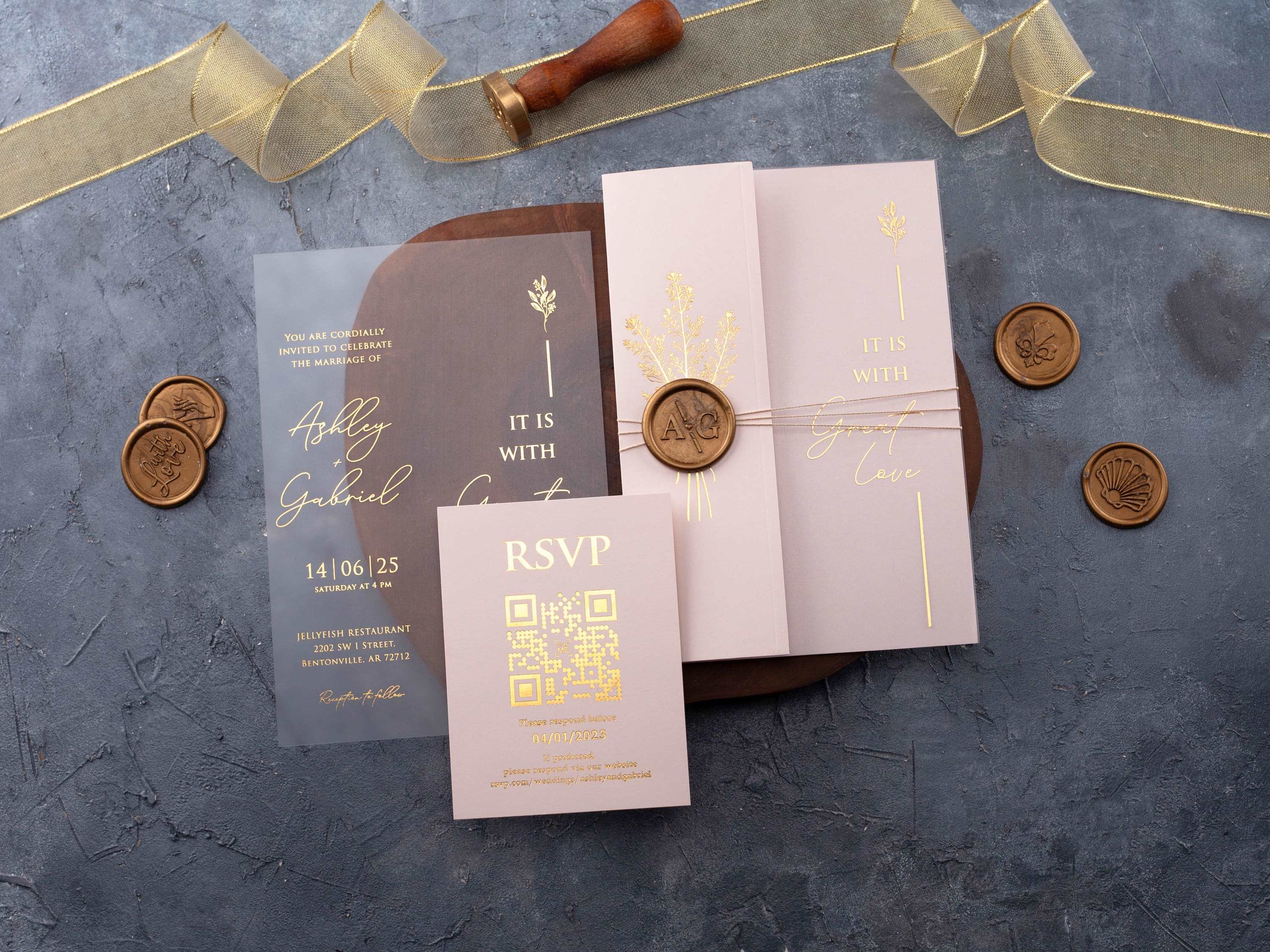
The side panels can remain decorative or carry small amounts of supporting information. Some designs add a band, ribbon, seal, belly band, or outer jacket to keep the panels closed. That layered presentation gives gatefold wedding invitations a ceremonial feeling that works well for formal and evening celebrations.
Gatefolds are especially effective when you want the main invitation to remain the visual focus. Details can be placed on separate cards or on the inside panels, but overcrowding the panels can weaken the reveal. Let the fold frame the design rather than fill every available space.
What Is a Trifold Wedding Invitation?
A trifold invitation uses three connected panels that fold over one another. It can open horizontally, vertically, or in an accordion-like sequence depending on the design. Because each panel has a clear boundary, the format is useful for separating the main invitation, travel details, schedule, accommodations, website, and RSVP instructions.
The reader moves through the information in an intended order. That makes trifold wedding invitations practical for destination weddings, multi-event weekends, and celebrations with more guest guidance than a single card can comfortably hold.
A trifold can still feel formal. Use consistent typography, controlled color, and enough white space on every panel. The design should feel like one continuous piece, not three unrelated cards attached together.

Which Format Gives You More Room for Information?
Trifold designs usually provide more built-in space because the panels are intended to carry separate content. You can dedicate one panel to the ceremony, another to reception or travel information, and another to RSVP instructions. This reduces the number of loose inserts and keeps related details together.
Gatefold designs can hold substantial information too, but their strength is presentation. The central panel typically deserves visual breathing room, while side panels work best with shorter details. If the gatefold includes a pocket or separate cards, the total suite can carry as much information as a trifold, although it may become thicker and more expensive to mail.
List every detail before selecting a format. If most information can live on a wedding website, a gatefold may provide the stronger visual experience. If guests need schedules, addresses, or travel guidance in print, a trifold may keep the suite more organized.
Which Folded Invitation Feels More Formal?
Gatefold invitations often feel more formal because the symmetrical opening resembles a presentation folder or ceremonial reveal. A centered monogram, metallic detail, or layered jacket can heighten that effect. The format pairs naturally with black-tie, ballroom, estate, and elegant evening weddings.
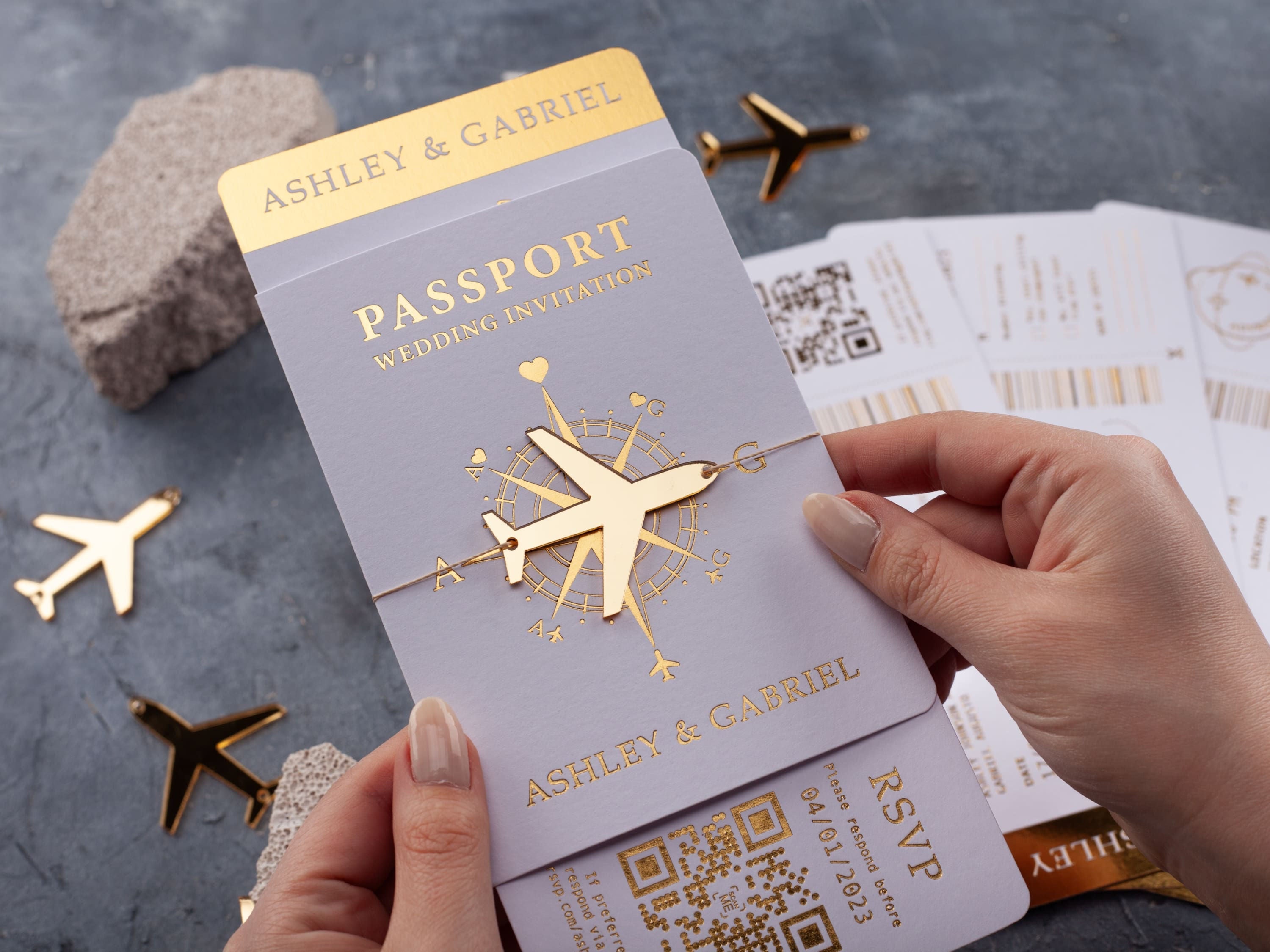
Trifold invitations can range from playful to polished. A travel-inspired layout may feel casual, while heavy paper, refined typography, and restrained printing can make the same fold suitable for a formal destination wedding. Material and design choices influence formality more than the number of folds.
If you are comparing the broader category, browse folded wedding invitations and focus on the examples that match your venue and dress code.
How Do Gatefold and Trifold Invitations Compare for Mailing?
Mailing cost depends on the finished size, weight, thickness, and flexibility of the complete suite. A simple trifold may reduce loose inserts, but the folded card can still become thick. A gatefold with ribbon, a seal, a pocket, or several detail cards may require additional postage or special handling.
Always test the final configuration. Place every component in the exact envelope you plan to use, close it, measure it, and have it weighed. Confirm that embellishments do not create an uneven lump and that the invitation can travel without the panels catching or bending.
A protective outer envelope can help with elaborate designs. If you prefer a layered suite, pocket wedding invitations offer another way to organize cards while keeping the presentation secure.
Which Format Works Best for Destination Weddings?
Trifold invitations are especially useful when guests need a compact printed reference. Separate panels can cover the destination, travel dates, accommodation, ceremony, welcome event, and wedding website. The sequence helps guests find information without unfolding several loose cards.
Gatefold suites work well when the destination wedding is formal and the main invitation deserves a dramatic reveal. Use the center for the announcement and place concise travel details on side panels or separate cards. A wedding website can carry changing information, while the printed suite handles the facts guests need to keep.
Choose based on guest needs. If most guests are traveling internationally or attending several events, information architecture matters. If logistics are simple and the invitation is primarily an emotional first impression, presentation may matter more.
How Should You Choose Between Gatefold and Trifold?
Begin with content, not appearance. Write the invitation, list every supporting detail, and decide what belongs in print versus online. Then choose the fold that creates clear hierarchy. A beautiful format is only successful if guests can understand it quickly.
Next, compare physical samples. Open and close each format several times, check how the paper behaves at the folds, and confirm that text does not sit too close to a crease. Assemble the envelope and test the mailing weight before approving the full quantity.
Finally, consider the feeling you want to create. Choose gatefold for a centered reveal, formal layering, and a strong first impression. Choose trifold for a guided reading experience, efficient organization, and destination details. If neither feels right, browse all wedding invitations before committing to a folded format.
- List the information guests need.
- Choose what stays in print and what moves online.
- Compare finished samples and folds.
- Assemble and weigh the complete suite.
- Select the format that matches the wedding's tone.
What Else Should You Know About Folded Wedding Invitations?
What is the main difference between gatefold and trifold invitations?
Gatefold designs open from two side panels toward the center, while trifold designs use three connected panels that fold over one another.
Which format holds more wedding information?
Trifold invitations usually organize more text across their panels, although inserts can give a gatefold suite additional space.
Are gatefold invitations more formal than trifold invitations?
Gatefold designs often feel more dramatic and formal, but paper, typography, color, and finishing choices influence formality more than the fold alone.
Do folded invitations cost more to mail?
They can if added layers, inserts, or embellishments increase thickness or weight, so weigh a completed sample before buying postage.
Which format is better for a destination wedding?
Trifold designs are useful for schedules and travel details, while gatefold suites work well when you want a formal reveal with separate information cards.
Can gatefold and trifold invitations include RSVP details?
Yes. You can place a concise RSVP instruction on a panel or direct guests to a wedding website with a clear deadline.
Compare the reveal, layout, and personalization options in our gatefold wedding invitations.

Leave a comment
This site is protected by hCaptcha and the hCaptcha Privacy Policy and Terms of Service apply.