
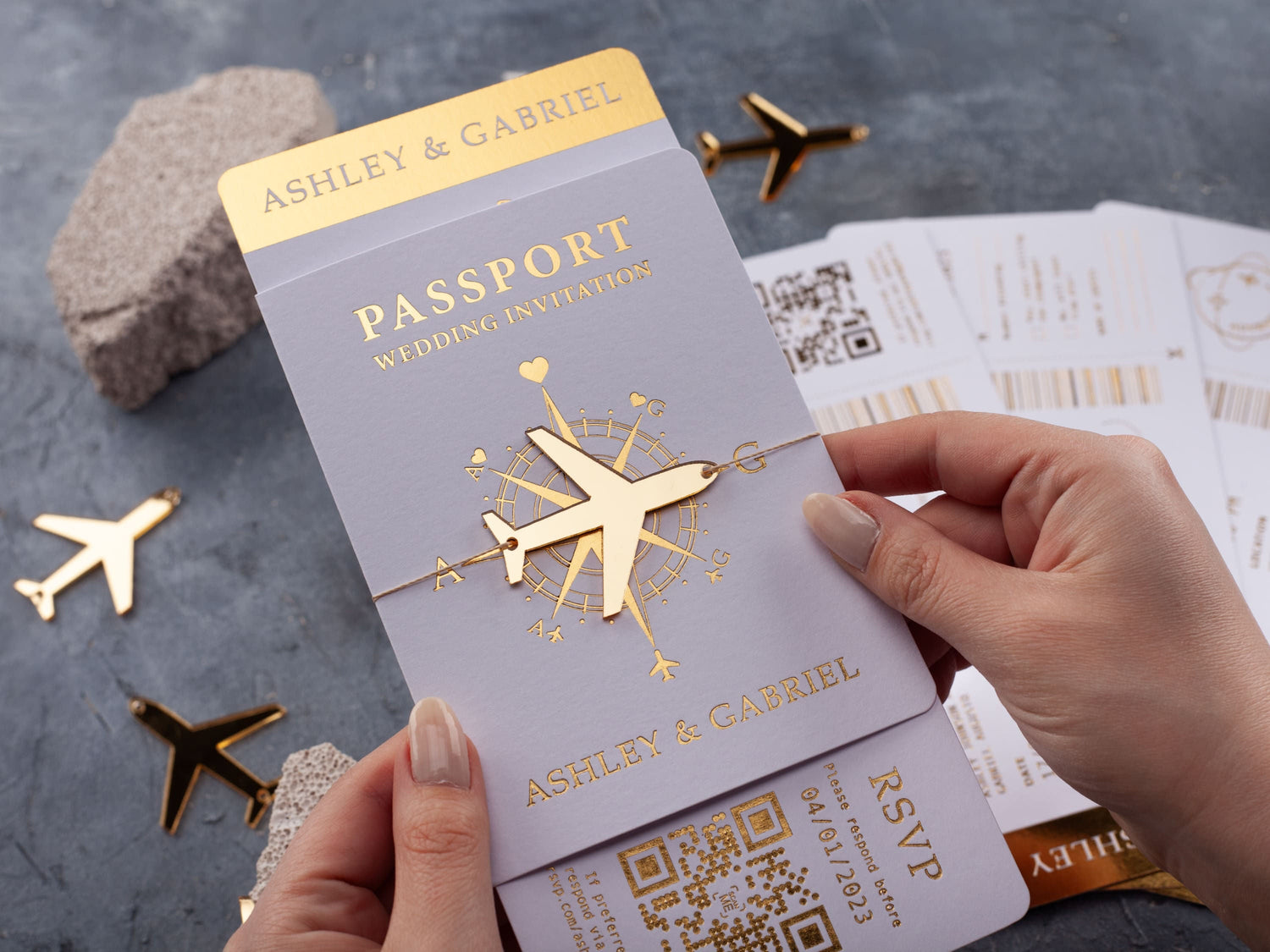
In short: Passport wedding invitations are booklet-style and suit destination details, itineraries, and a keepsake feel. Boarding pass invitations are flatter, more playful, and ideal for concise travel information. Choose the format based on how much content guests need, how formal your event feels, and the mailing experience you want.
Travel-themed invitations do more than announce a destination. They introduce the experience guests are about to join. Passport and boarding pass formats both use familiar travel cues, but they organize information differently and create different levels of formality.
A passport invitation feels like a small booklet and can hold a detailed itinerary. A boarding pass invitation feels like a ticket and communicates the journey in a quick, playful way. Use the amount of guest information, the tone of the celebration, and the finished mailing package to decide which one fits your wedding.
What Is a Passport Wedding Invitation?
A passport wedding invitation is designed like a travel document, usually with a cover and multiple inside pages. The cover may feature the couple's names, wedding date, monogram, destination, or a seal-inspired graphic. Inside pages can separate the formal invitation from travel, accommodation, itinerary, and RSVP information.
The booklet format gives passport wedding invitations a keepsake quality. Guests open them in stages, which makes the announcement feel like the beginning of a journey. The format suits destination weddings, international guest lists, and wedding weekends with several planned events.
A passport design does not have to look like a novelty. Refined typography, controlled colors, quality paper, and a focused foil detail can make it elegant enough for a formal celebration while preserving the travel concept.
What Is a Boarding Pass Wedding Invitation?
A boarding pass invitation resembles an airline ticket. It is usually a single flat card or a compact layered format with clear sections for the couple, date, destination, gate-inspired details, and RSVP instructions. The shape creates immediate travel recognition without requiring several pages.
Because the design is concise, boarding pass wedding invitations are ideal when you want a playful reveal and most detailed logistics will live on a wedding website. They also work for save-the-date-style announcements, elopements, and local weddings with a strong travel story.
The ticket format can be modern or romantic depending on color and finish. Avoid making essential information look like decorative airline codes. Guests should be able to find the wedding date, location, time, and response instructions immediately.

Which Format Holds More Destination Details?
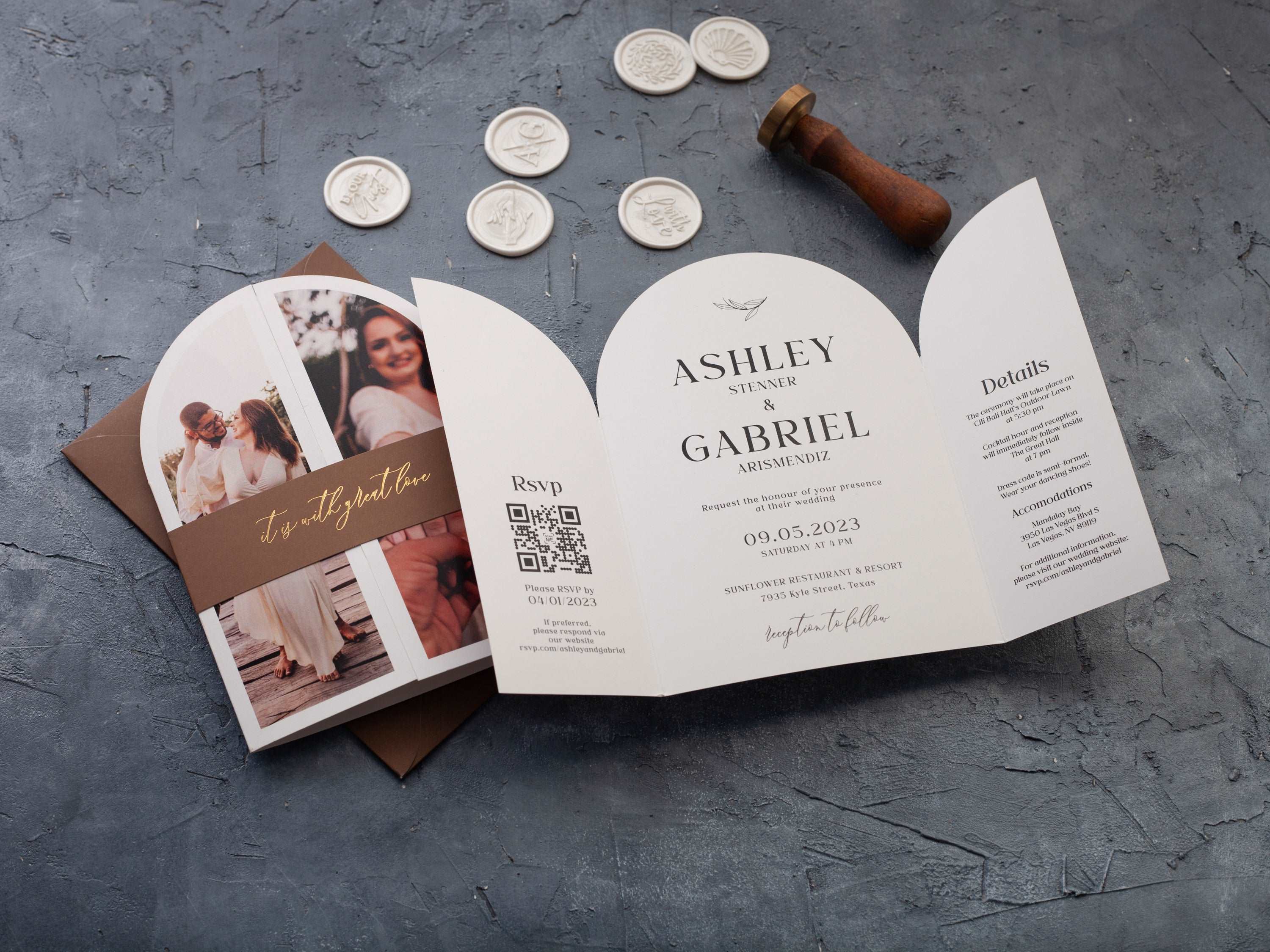
Passport invitations hold more information naturally because the booklet provides separate pages. You can give the formal invitation its own space, then use later pages for airport guidance, accommodation, transportation, welcome events, local recommendations, and the wedding website.
Boarding pass invitations work best with a shorter information set. Include the primary event details and one clear route to the wedding website. If you need more content, add one coordinated details card rather than shrinking the type or filling every available area.
Keep changing logistics online. Flight suggestions, shuttle timing, room availability, and weather guidance may change after invitations are printed. The invitation should contain stable facts; the website should carry information that needs updating.
Which Travel Invitation Style Feels More Formal?
Passport invitations often feel more formal because they have a cover, page sequence, and substantial physical presence. Dark colors, metallic foil, embossed details, and structured typography can make the booklet feel polished and ceremonial.
Boarding pass invitations usually feel more casual or playful because the ticket reference is immediate. They can still look refined when the design uses high-quality paper, elegant typography, generous spacing, and restrained travel graphics. Formality comes from execution as much as format.
If you want travel symbolism with a more traditional finish, compare the two formats with our luxury wedding invitations and note which materials and layouts match your venue.
How Do the Two Formats Compare for Mailing?
A boarding pass card is usually lighter and flatter, which can make standard mailing easier. A passport booklet may be thicker, especially when it has several pages, a heavy cover, foil, or an additional insert. Either format can require extra postage if the finished suite exceeds size, weight, or thickness limits.
Protect the invitation with an envelope that fits without bending the card or crushing the booklet spine. For a passport, check that pages stay aligned and the cover remains closed. For a boarding pass, make sure narrow corners and perforation-inspired details will not catch during handling.
Assemble one complete suite and weigh it before ordering postage. Include every card, liner, seal, ribbon, and protective layer. The sample should match what guests will actually receive, not just the main invitation piece.
Can Either Format Work for a Local Wedding?
Yes. A travel format can represent the couple's story even when guests are not crossing borders. It may suit couples who met while traveling, love aviation, are planning a honeymoon-focused celebration, or see marriage as a shared journey.
The wording must keep the real venue clear. Do not let airport-style labels suggest that guests need to book a flight when the wedding is local. Use the travel concept for personality, then present the date, address, time, and RSVP instructions in familiar language.
For a local wedding with minimal logistics, a boarding pass may feel more proportionate because it communicates the theme without creating unused pages. A passport can still work when the booklet includes the couple's story, schedule, or meaningful destination references.
How Should You Choose the Right Travel-Themed Invitation?
Start by listing the information guests need in print. Choose a passport if you have multiple events, accommodation guidance, travel instructions, or a detailed itinerary. Choose a boarding pass if the invitation can stay concise and your wedding website will handle the rest.
Next, decide how formal the first impression should feel. A structured passport booklet supports a keepsake experience, while a boarding pass creates faster, more playful recognition. Compare physical samples so you can judge paper, folds, print size, and how the format feels in the hand.
Finally, test the complete mailing package and read it as a guest. The design should be fun, but the instructions must be unmistakable. If you need more visual options before deciding, browse all wedding invitations and compare travel formats with traditional layouts.
- List the stable details guests need.
- Decide what belongs on the wedding website.
- Choose booklet depth or ticket simplicity.
- Compare physical samples and readability.
- Assemble and weigh the full mailing suite.
What Else Should You Know About Travel-Themed Wedding Invitations?
What is the difference between passport and boarding pass invitations?
Passport invitations use a booklet format, while boarding pass invitations resemble a travel ticket and usually present information in a flatter layout.
Which invitation is better for a destination wedding?
Passport invitations suit detailed itineraries and travel guidance; boarding pass invitations suit a concise, playful travel announcement.
Can passport invitations include multiple pages?
Yes. Their booklet structure can organize the invitation, schedule, accommodation, travel, and RSVP information across separate pages.
Do boarding pass invitations require an envelope?
They should be protected for mailing, and an envelope also gives you space for addressing, postage, and any necessary inserts.
Are travel-themed invitations only for destination weddings?
No. They can also fit couples who love travel, aviation, or a journey theme, provided the wording makes the actual venue clear.
When should destination wedding invitations be sent?
Send formal invitations about three to four months before the wedding, after giving guests earlier notice when significant travel is required.
Ready to give guests a first glimpse of the journey? Explore our passport wedding invitations and personalize your destination details.

Leave a comment
This site is protected by hCaptcha and the hCaptcha Privacy Policy and Terms of Service apply.